UofT SCS Product Management Bootcamp — CapstonecollaGEN is a product and brand concept exploring how a portable, effervescent, sugar-free collagen ritual can make long-term mobility support easier to adopt and maintain.
Designing a collagen routine people can actually stick with
Product strategy · UX · Growth · Validation · Go-to-market
collaGEN MOVE is a capstone concept developed for the University of Toronto School of Continuing Studies Product Management Boot Camp.
The project explored one question:
“How might we help people maintain a collagen routine long enough to evaluate its potential benefit?”
Rather than positioning collagen as another beauty powder, I designed collaGEN MOVE as a portable, mobility-focused routine supported by guided onboarding and an adherence-based subscription journey.
My role: Solo product strategist and designer
Deliverables: Market analysis, product strategy, high-fidelity prototype, validation plan, PRD, roadmap, analytics and GTM strategy
Status: Academic concept; not commercially launched
The problem
Many collagen products compete through beauty claims, serving sizes and bulk discounts.
For people focused on mobility and active ageing, the larger challenge is often behavioural:
Tubs are inconvenient to carry
Powders can feel like a chore
Ready-to-drink cans are heavier to store and ship
Broad wellness messaging makes it difficult to identify the product’s primary purpose
Subscribe-and-save offers reward purchasing, but do not necessarily help users build a routine
The opportunity was not simply to create another formulation.
It was to design the experience around consistency.
The market opportunity
The model used an estimated CAD $480 annual customer value and a conservative three-year target of 11,250 customers.
These figures were intended to test viability, not forecast revenue. Population and competitor pricing were externally supportable inputs; supplementation openness, reachable buyers and market capture were working assumptions requiring validation.
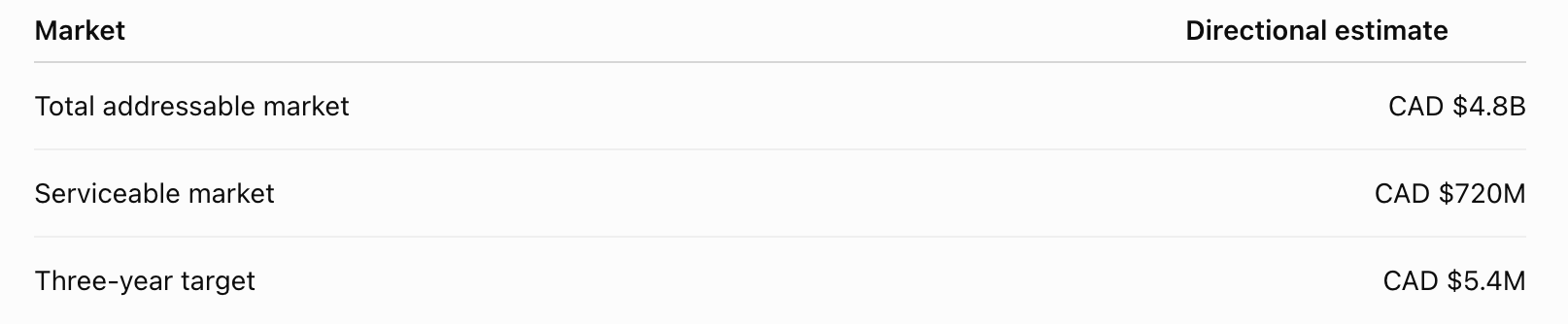
I created a directional market model to determine whether a focused Canadian DTC niche could support a subscription business.
Finding the competitive gap
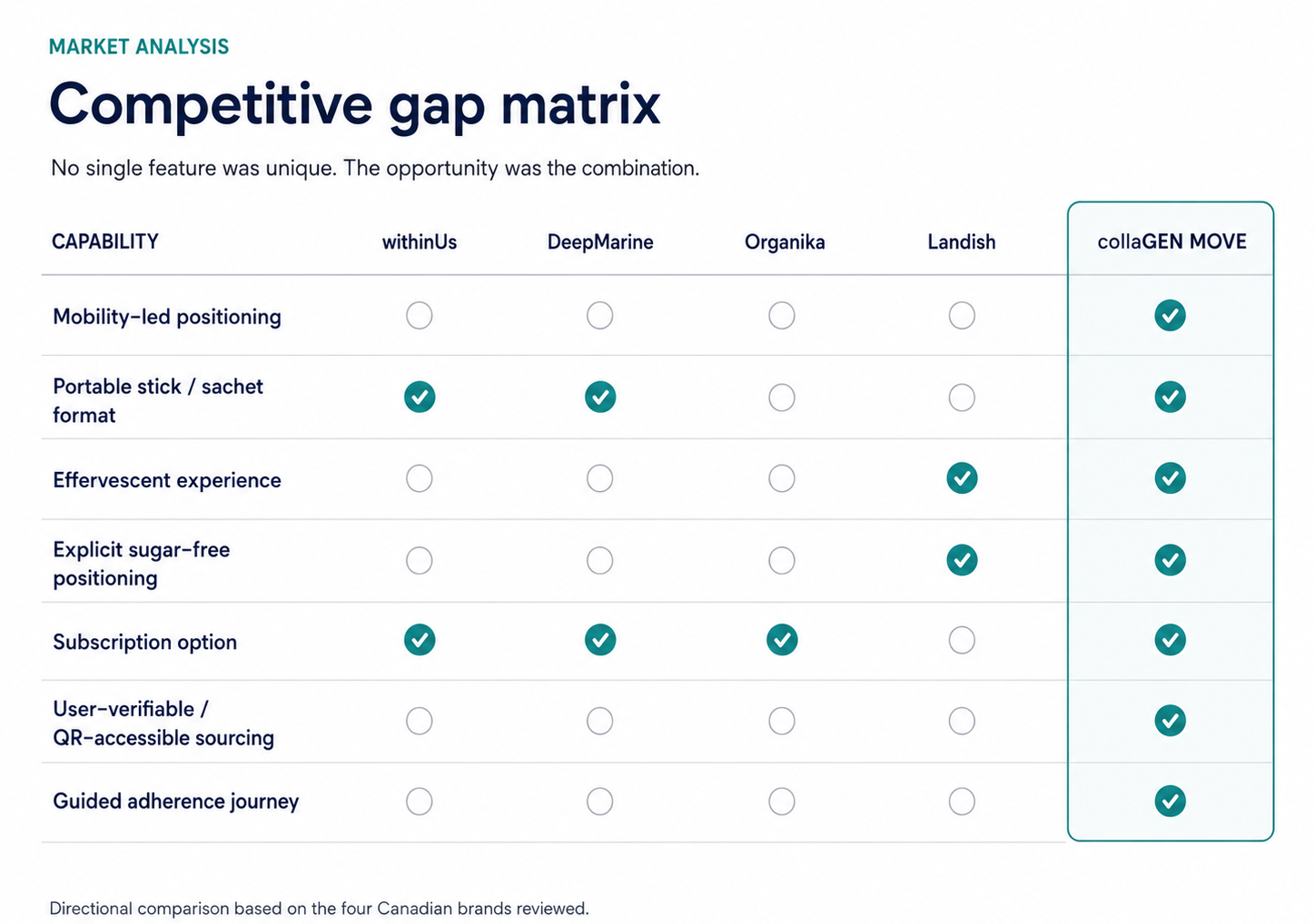
I reviewed 4 Canadian competitors:
The opportunity was therefore not that competitors lacked joint-health claims, sachets or subscriptions.
Among the 4 Canadian brands reviewed, I did not find one offer combining:
Mobility as the primary brand identity
Portable effervescent single-serve sachets as the hero format
Source provenance designed for user verification
A guided trial-to-adherence journey
The product concept
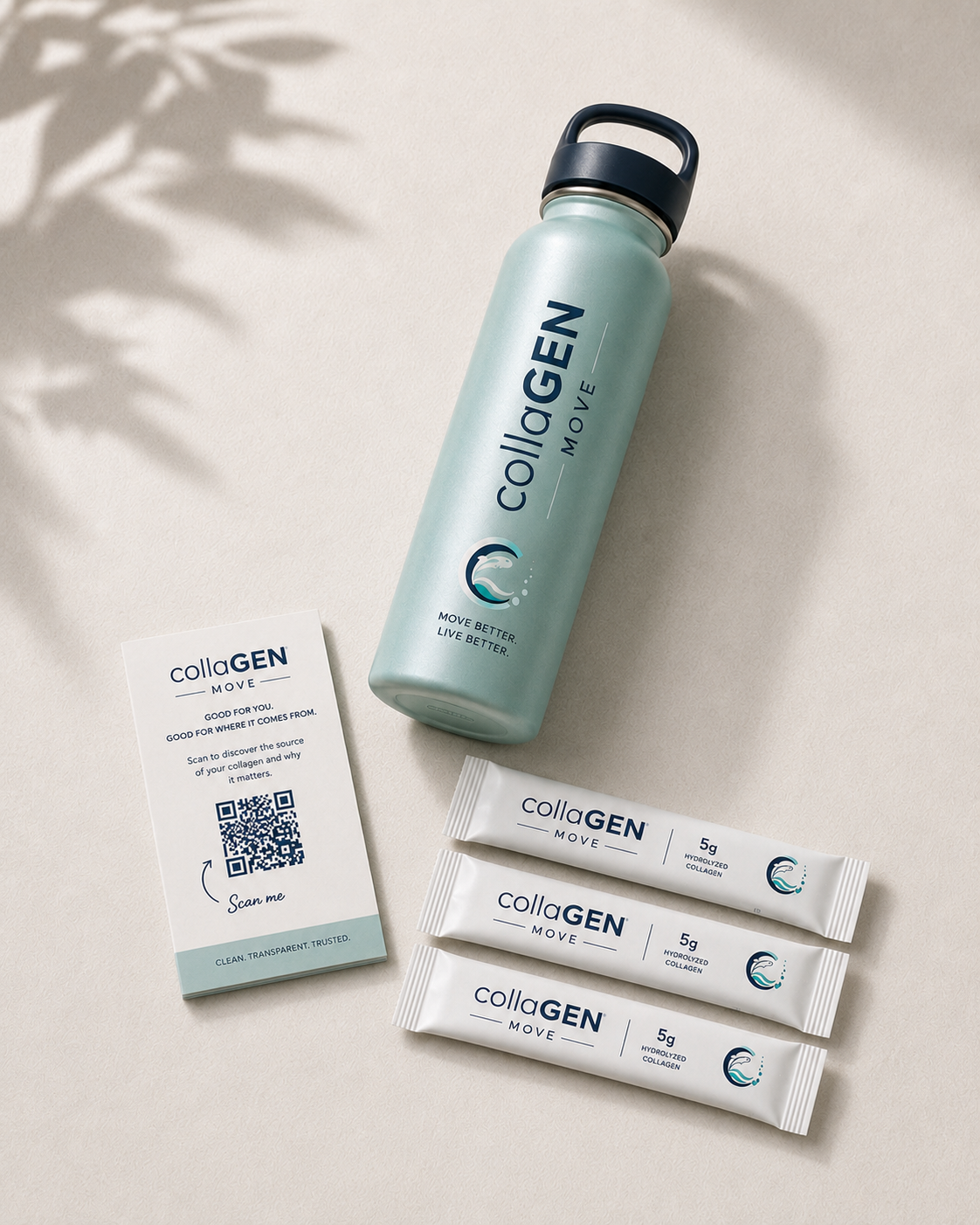
collaGEN MOVE is a proposed sugar-free, monk-fruit-sweetened marine-collagen drink in portable effervescent sachets.
The experience combines:
5 g single-serve sachets
A branded reusable bottle
QR-accessible sourcing information
A 3-day ritual guide
A discounted first month
A 5 month Joint Reset journey
Subscription management and lifecycle reminders
The product was positioned around mobility and long-term movement rather than cosmetic beauty.
I designed it as a subscription-led mobility habit system built around portability, traceability, enjoyable use and consistency.
Who I designed for
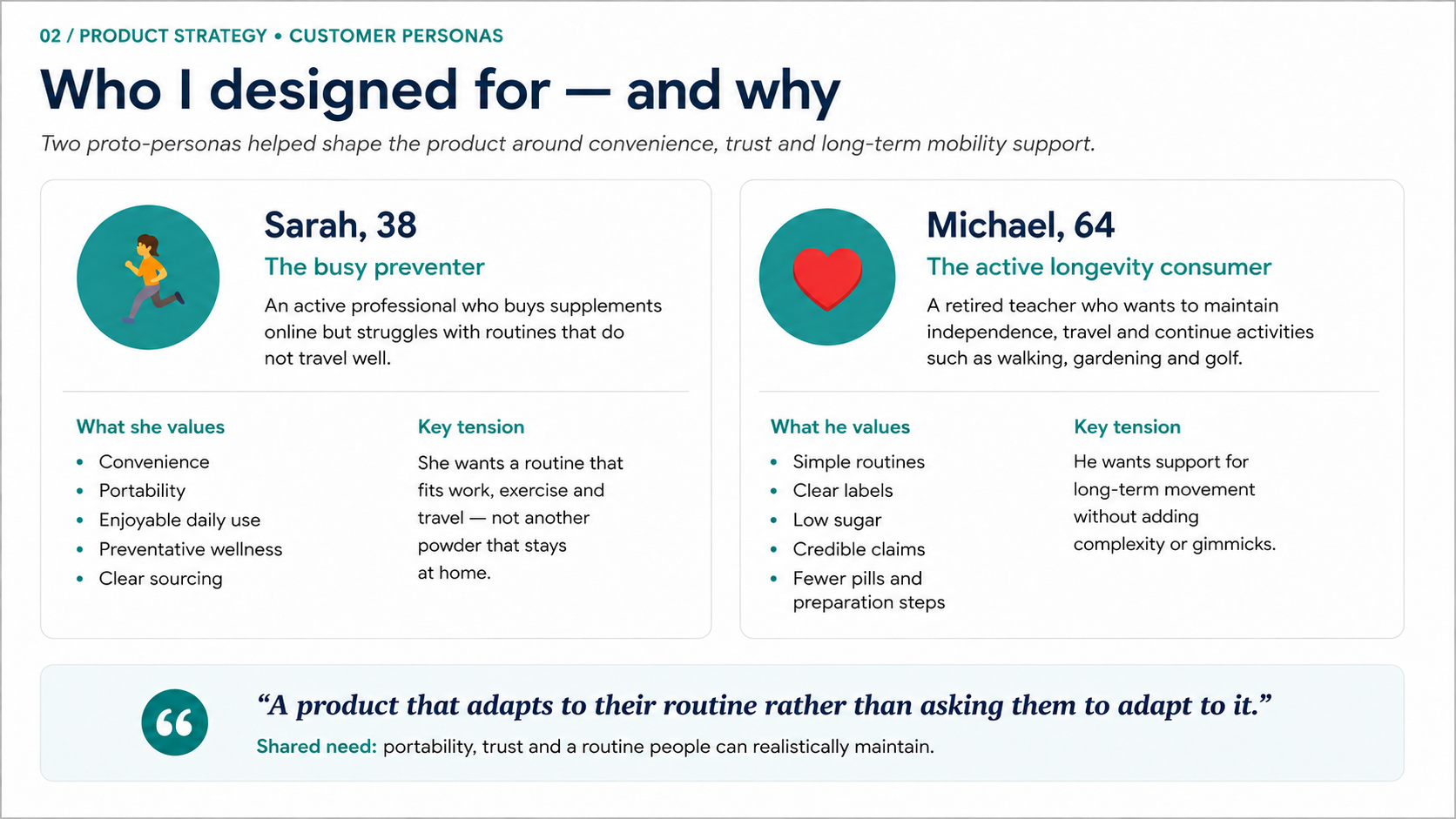
I created 2 personas based on category research and behavioural assumptions.
Their demographics and channels differ, but the shared need is the same:
“A product that adapts to their routine rather than asking them to adapt to it.”
The feature I would build first
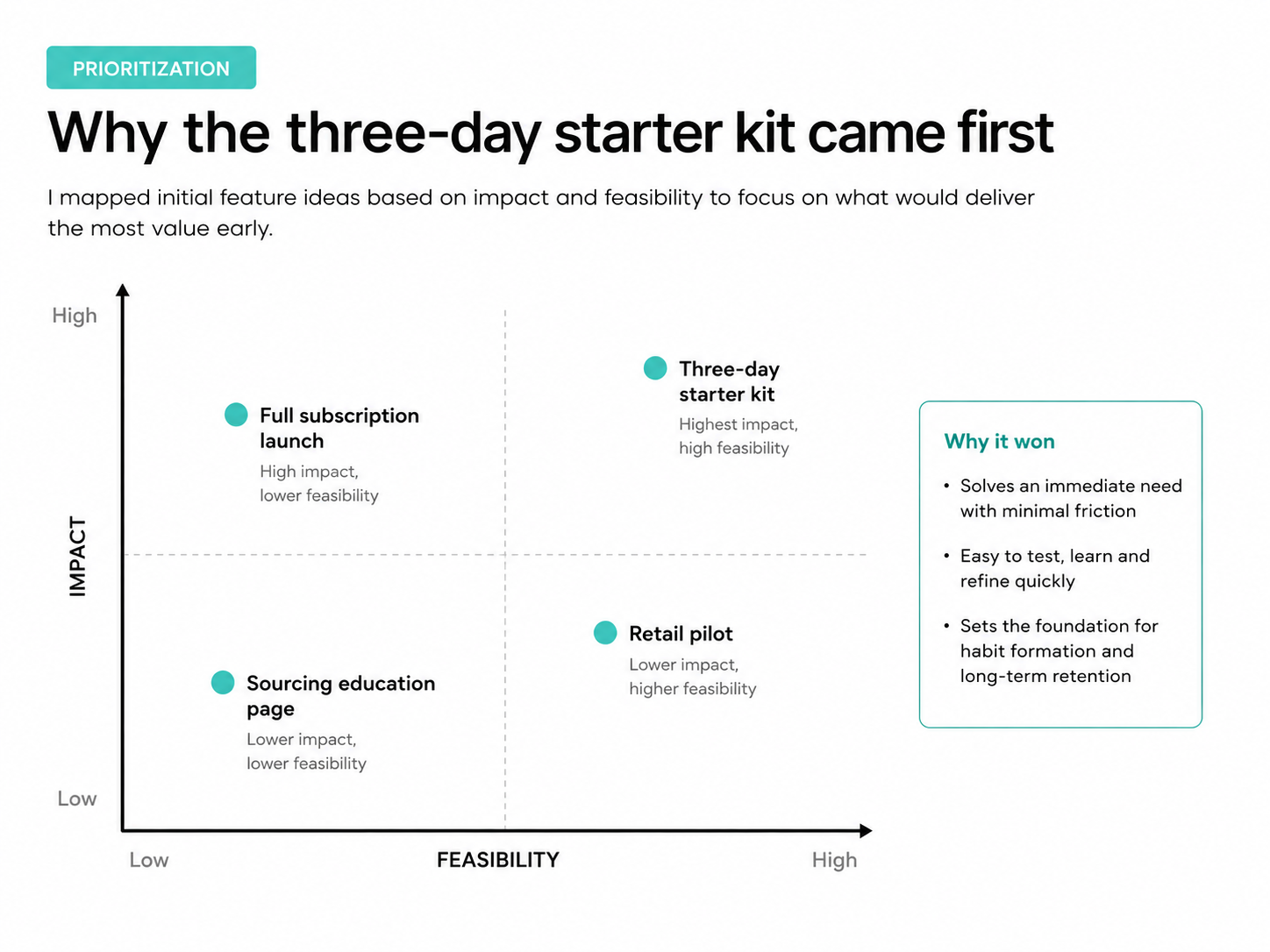
The 3-day MOVE Starter Kit
The starter kit was designed as more than a free sample.
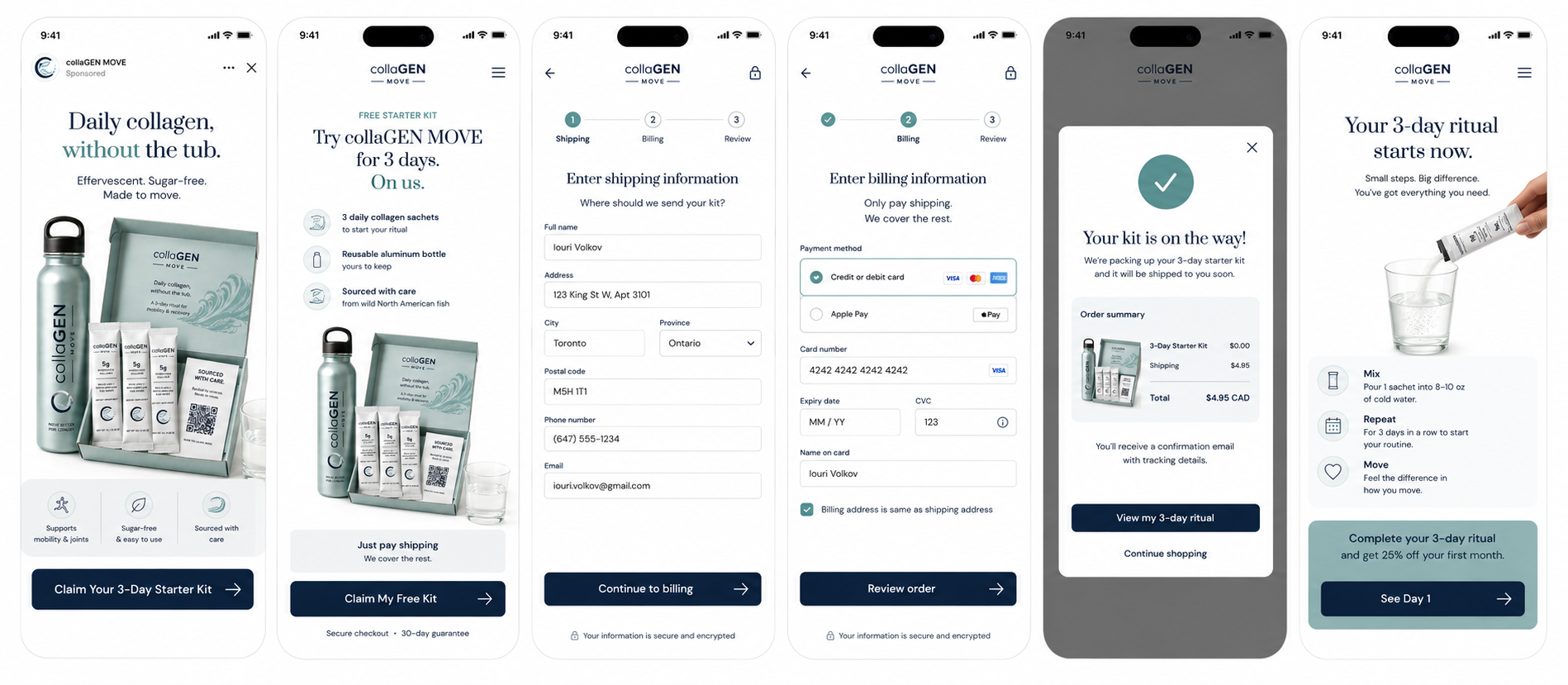
It acts as a complete acquisition and activation system:
Ad → Claim kit → Checkout → Kit delivered → QR scan → 3-day ritual → 1st month offer
The launch kit includes a bottle, 3 sachets, premium packaging and a QR sourcing card.
The 2 most likely drop-off points are:
Email capture
Shipping and payment
Those steps occur before the user receives any physical value, so I prioritized them for instrumentation and testing.
What the 3-day kit is meant to prove
3 days is not enough time to demonstrate a meaningful joint-health outcome.
The kit instead tests whether the routine feels:
Convenient
Enjoyable
Credible
Easy to understand
Easy enough to continue
This distinction is essential to avoid overpromising.
The conversion strategy asks users to continue based on trust, routine fit and expected future value, not because they should already feel a physiological result.
Pricing built around adherence
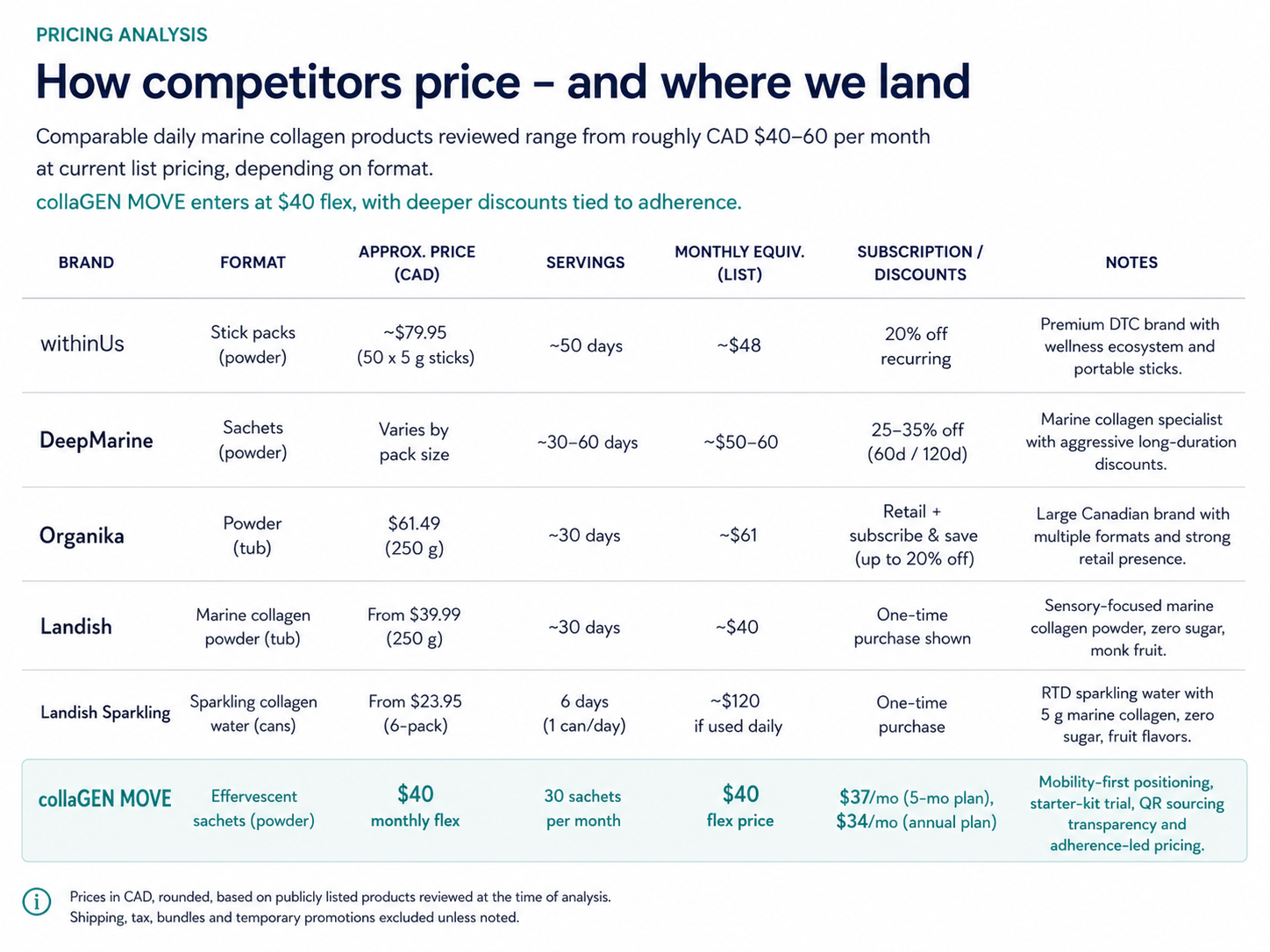
I designed a pricing ladder intended to reduce the jump from a free trial into a longer commitment.
The 5 month Joint Reset was not chosen arbitrarily.
Health Canada’s Hydrolyzed Collagen product monograph lists 1.2-10g of hydrolyzed collagen per day for joint pain use and states:
“Use for at least 5 months to see beneficial effects.”
collaGEN MOVE was designed around 5g per daily sachet, which falls within that monograph dosage range. The 5 month Joint Reset therefore connects the commercial subscription structure to the regulatory use horizon rather than using an arbitrary commitment period.
Product logic
3-day starter kit
Tests whether the format feels convenient, enjoyable and trustworthy.
1st month - $30 CAD
Creates a lower friction bridge from trial to continued use.
Months 2-5 - $37 CAD / month
Supports continued adherence through the minimum 5 month use period referenced in the Health Canada monograph.
Total proposed Joint Reset journey: 5 months
The important distinction is that the 3-day trial is not intended to demonstrate a physiological joint health result. Its purpose is to test product fit and willingness to continue. The longer programme is what aligns the customer journey with the monograph’s stated timeframe for evaluating beneficial effects.
The 5 month timeline informed the product strategy, but collaGEN MOVE remains a concept and would require final formulation, dosage form, claims and Natural Health Product regulatory review before commercial launch.
Comparable marine collagen products generally range from roughly $40-$60 per month at current list pricing, depending on format. (As of 07.28.26)
The longer subscription was connected to the usage horizon associated with hydrolyzed-collagen joint-health products, but the concept would still require complete formulation, dosage-form and regulatory review before commercial launch.
Why the flagship plan is 5 months
How I would validate it
I structured validation in three progressively more expensive stages.
1. Usability testing
Moderated sessions with 5–7 target users to test:
Product comprehension
Mobility positioning
Starter-kit clarity
Checkout friction
Sourcing credibility
Ritual-guide usefulness
2. Smoke test
A realistic landing page and fake-door flow to test whether qualified visitors would claim the starter kit and proceed toward checkout.
3. Starter-kit pilot
A small batch of real kits to measure:
First use within 48 hours
QR scan rate
3-day completion
Taste and convenience feedback
Interest in the first-month offer
The validation plan explicitly identified risks around beauty-led interpretation, shipping friction, sourcing confusion and whether 3 days was enough to justify continued use.
I also pre-committed to changes before seeing results:
Sharpen mobility messaging if users interpret it as beauty-led
Adjust shipping if checkout abandonment is high
Simplify the ritual guide if it feels unnecessary
Deprioritize sourcing if it fails to build trust
Lead with monthly continuation if the five-month plan feels too aggressive
Go to market strategy
I assigned each channel a specific role.
Paid social
Instagram and TikTok would generate awareness through mobility, portability and starter-kit creative.
Creators and practitioners
Fitness, active-ageing and movement educators would help demonstrate the routine and build trust.
Search and lifecycle messaging
Search would capture high-intent users, while email and SMS would recover checkout abandonment and guide users through activation and continuation.
The GTM strategy connected all three channels to one funnel rather than treating them as separate campaigns.
What I would do differently
Validate the sourcing story earlier
Fish bone provenance and QR traceability may build trust, but they could also create confusion or aversion.
Add unit economics before scaling
The starter kit would require verified estimates for manufacturing, packaging, fulfilment, shipping, CAC, gross margin and payback period.
Expand operational risk planning
A real launch would require explicit plans for:
Inventory
Manufacturing delays
Product quality
Allergens
Adverse reactions
Returns
Subscription cancellation
Regulatory incidents
Define stakeholder communication
Product, design, engineering, manufacturing, fulfilment, regulatory, marketing, analytics, customer support and leadership would each require clear owners, reporting cadence and escalation paths.
Reflection
The most important lesson was that the product is not only the supplement.
The product is the system that helps someone:
“discover it, understand it, trust it, begin using it and decide whether the routine deserves a place in their life.”
collaGEN MOVE became a complete product experience built around acquisition, activation, trust and retention—not simply another collagen powder.